The demographic paradox: fewer children, greater investment
By the end of 2024, China was home to 222 million children aged 0 to 14 - a figure that had declined by 8 million compared to the previous year as the country's birth rate continued to fall. Yet the market paradox is striking: total spending on children's nutrition has not contracted. With fewer children in the household, each child receives more. More attention, more care, and considerably more financial investment per capita.
According to data from Mintel – Children’s Nutrition in China 2025, this trend is most pronounced among parents born after 1990. They are a generation raised alongside the internet, comfortable with researching ingredients online, consulting paediatric nutritionists on social media, and taking cues from key opinion leaders. 'Scientific parenting' - a structured, evidence-based approach to child-rearing, has evolved from a niche aspiration into the baseline expectation among urban Chinese parents.
With a younger population pyramid and a rapidly expanding urban middle class, Vietnamese parents in major cities like Hanoi and Ho Chi Minh City are beginning to exhibit strikingly similar behaviours: scrutinising ingredient lists, following nutrition-focused influencers, and prioritising quality over price. The gap between the two markets is a window that is closing, and that represents a strategic entry point for brands with the right positioning.
When families have fewer children, each child commands greater investment - and the bar for what parents consider acceptable rises accordingly.
Three defining trends from China's nutrition market
China's children's nutrition market is navigating a complex landscape shaped by demographic shifts, evolving parental attitudes, and changing product innovation strategies. Mintel identifies three major trends reshaping how products are developed, marketed, and consumed.
The first is a shift from basic nutrition to holistic wellbeing. Today's Chinese parents are not satisfied with knowing their child is eating enough. They want to understand what each product does - for immunity, gut health, oral health, cognitive development, and increasingly, weight management in older children. Emotional wellbeing has also entered the equation: parents are actively seeking products and experiences that contribute to a joyful, memorable childhood, not just a healthy one. This reframes the entire brief for product developers.
The second trend is the rapid premiumisation of functional health supplements. This segment is growing in both volume and value, as parents willingly pay a premium for products that address specific nutritional gaps - particularly for children who are picky eaters. What distinguishes the most successful products, according to Mintel, is their ability to give children a sense of ownership over their health. Multi-functional supplements presented in formats children can engage with, like choosing, self-serving and tracking all reflect a new parenting philosophy. A philosophy stating that children are participants in their own health, not passive recipients of it.
The third trend is the responsible reinvention of indulgence. Innovation in fortified snacks and confectionery has accelerated, but along a different axis than in previous years. Rather than choosing between taste and nutrition, leading brands are demonstrating that the two can coexist. Confectionery enriched with micronutrients, snacks with clean-label formulations, and products whose fun packaging does not come at the expense of ingredient transparency. Younger parents, particularly those born in the late 1990s and early 2000s, respond strongly to this 'conscious indulgence' narrative.
Dairy remains the anchor category, prized for its natural nutritional profile. However, Mintel notes that innovation within child-specific dairy formats has slowed, with many brands pivoting toward family-oriented products under economic pressure. Despite this, parents continue to favour fortified dairy products, particularly those with added calcium and probiotics.
Implications for Vietnam's market
Vietnam is approaching an inflection point that is, in many ways, predictable, because China has already travelled this road. The conditions are converging: a growing cohort of educated, urban, digitally connected parents; rising disposable income per household; and an expanding ecosystem of nutritional information and parenting communities online.
The functional supplement and fortified food segments for children remain nascent in Vietnam compared to China, and this is precisely where the opportunity lies. Brands that enter early, invest in consumer education and build trust through scientifically substantiated nutritional claims will have the advantage of shaping the category before it becomes crowded. The cost of building category leadership is lowest at this stage.
Emotional and experiential value will also prove decisive in Vietnam's market. Products that combine genuine nutritional benefit with moments of joy - eating together as a family, the delight of an unexpected design on packaging, a story that unfolds across multiple purchases - create an emotional bond that transcends functional utility. Vietnam's deeply family-oriented food culture makes it particularly receptive to this kind of narrative.
On the supply and distribution side, cold chain infrastructure across Vietnam's secondary and tertiary cities remains uneven. This makes ambient-stable preservation technology not merely a convenience but a prerequisite for any brand with genuine national ambitions. Products that can maintain quality without continuous refrigeration can reach consumers that refrigerated formats simply cannot.
The brand that arrives first with the right preparation in Vietnam's children's nutrition market will not just win shelf space - it will define the category.
Ecolean: a packaging strategy built for this moment
In children's nutrition, packaging is the first thing a parent evaluates and the first thing that catches a child's eye. It communicates trust, safety, and brand values before the product is ever tasted. In a market where both the adult purchaser and the child consumer must be won simultaneously, packaging strategy is inseparable from brand strategy.
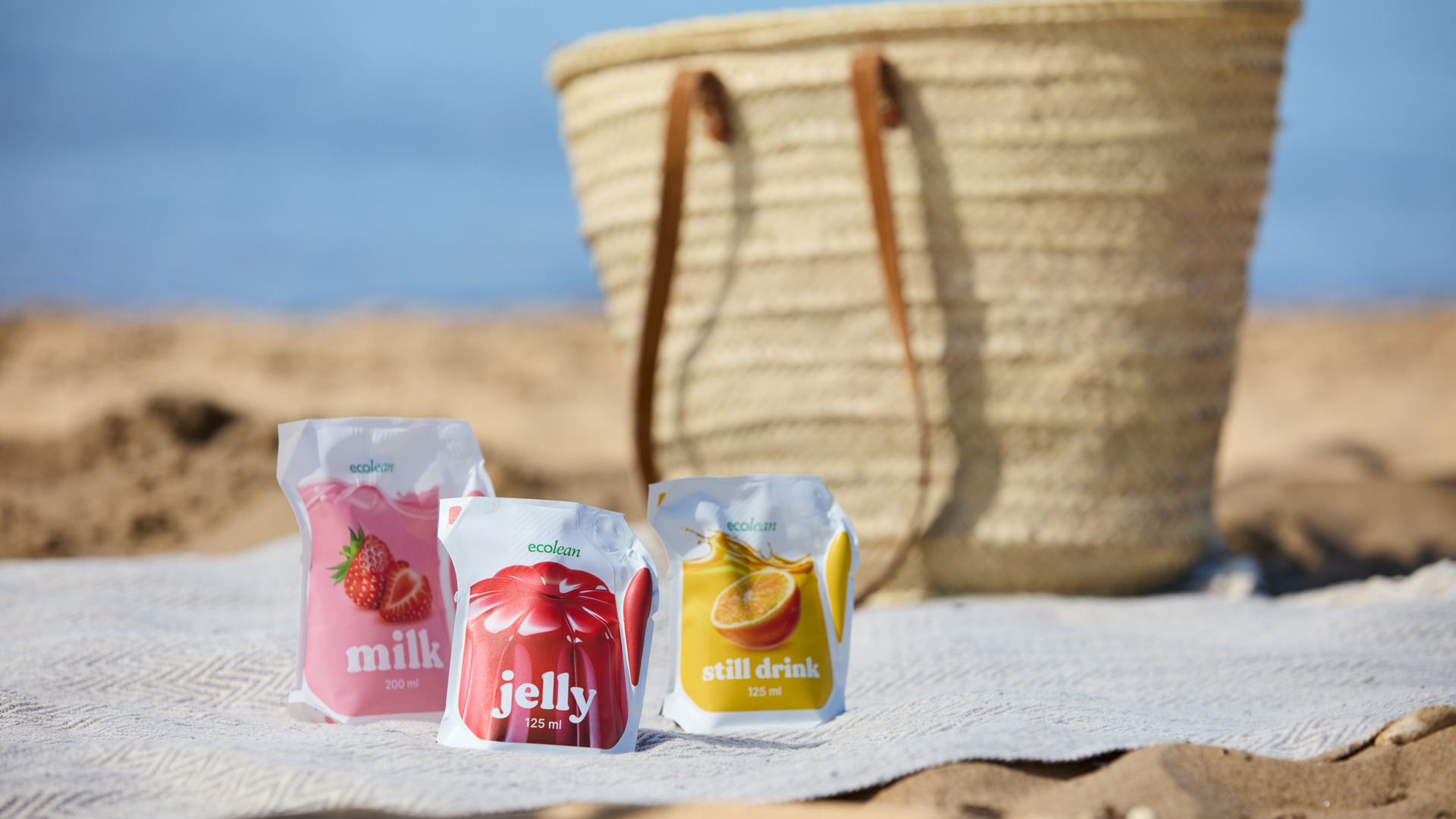
Ecolean's distinctive pouch format creates an immediate point of differentiation on shelf. In a category dominated by conventional cartons and bottles, the unusual silhouette commands attention within the few seconds a shopper's gaze typically lingers on a display. In high-density retail environments like supermarkets, convenience chains and grocery stores, where dozens of competing products occupy the same aisle, visual interruption is a strategic asset. A format that looks genuinely different does not need to shout to be noticed.
The aseptic filling technology at the heart of Ecolean's system carries equally significant commercial implications. Products filled under aseptic conditions can be stored and distributed at ambient temperature without preservatives, while maintaining nutritional integrity. For a market like Vietnam, where cold chain infrastructure is reliable in major urban centres but fragmented beyond them, this is a decisive advantage. A children's dairy or nutritional drink brand using Ecolean's technology can reach provincial towns and rural distribution networks that refrigerated formats cannot. Making it possible to expand addressable market without requiring investment in parallel cold chain logistics.
The portioned, child-appropriate format that Ecolean enables, also opens up for a compelling storytelling dimension for brands. Small, single-serve pouches are a natural canvas for character-based design, illustrated narratives, collectible series, or educational content printed directly on the pack. A brand can, for example, develop a cast of characters, each appearing on a different variant, each telling a fragment of a larger story that children actively seek out and parents willingly repurchase to complete. This transforms the packaging from a container into a relationship-building mechanism, creating repeat purchase behaviour that is driven by engagement rather than habit alone.
In a market where parents are increasingly selective about both what goes inside the pack and what the pack itself communicates, the combination of aseptic preservation, shelf differentiation, and brand storytelling capability makes Ecolean a strategically coherent choice. Not simply a packaging decision, but a market positioning one.